 Save
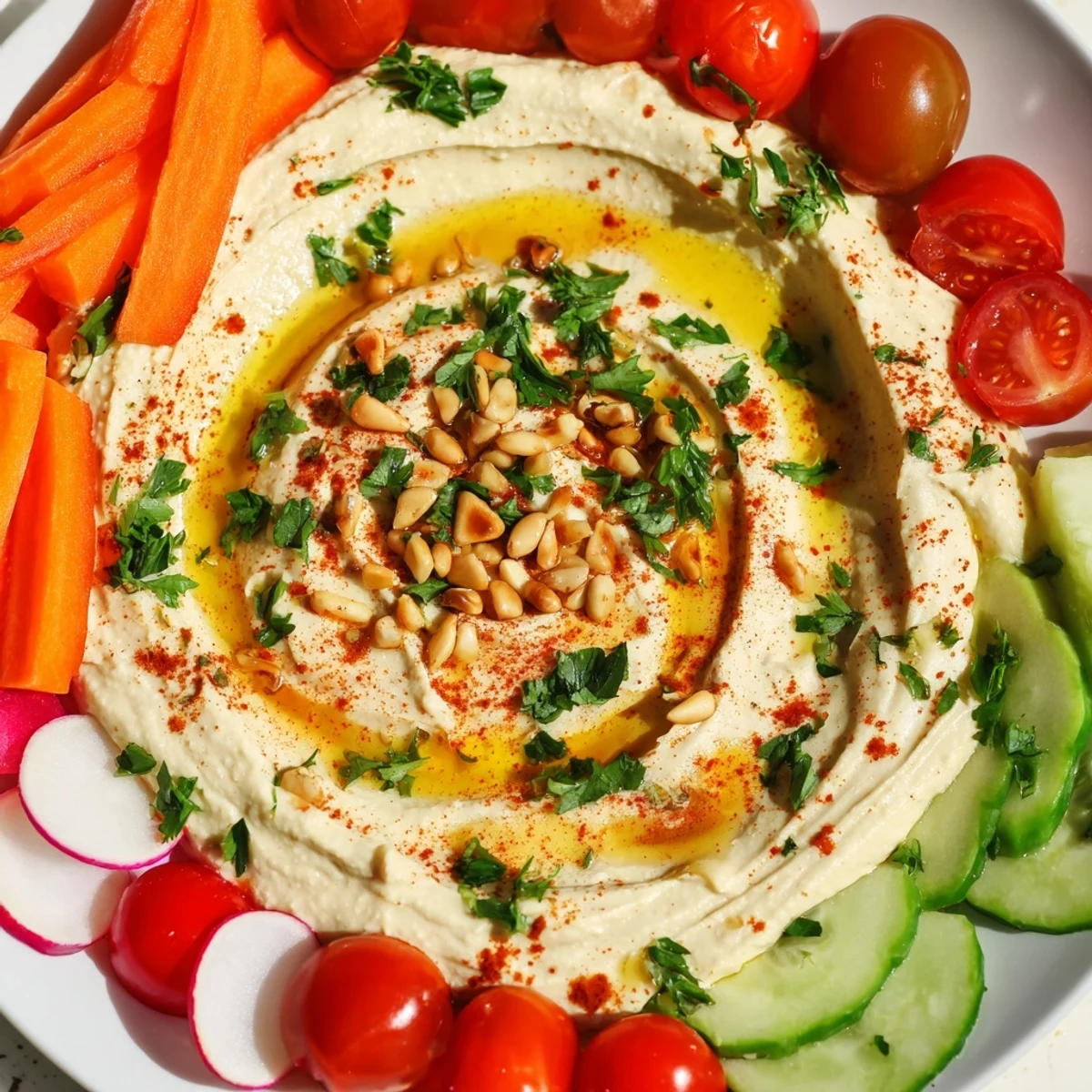
Save This halftime hummus platter combines silky homemade hummus made from chickpeas, tahini, and lemon juice with an array of crisp, colorful vegetables arranged for visual appeal. The hummus is blended smooth with garlic, cumin, and olive oil, then garnished with smoked paprika, fresh parsley, and toasted pine nuts. Fresh vegetables including cherry tomatoes, cucumbers, carrots, bell peppers, snap peas, and radishes surround the hummus for a refreshing, satisfying appetizer.
Ready in just 15 minutes with no cooking required, this Mediterranean-inspired platter serves six and works perfectly for game day entertaining or casual snacking. Naturally vegan and gluten-free, it's customizable with additional olives, pita, or crackers based on preference.
Last Super Bowl Sunday, I was running behind schedule when my doorbell rang two hours early. There stood my brother with three hungry friends in tow. In a panic, I raided my pantry, uncovered a can of chickpeas, and remembered the Mediterranean cooking class I'd taken last summer. Within minutes, this hummus platter saved the day, proving sometimes the simplest foods make the biggest impression.
When my colleague mentioned she was nervous about hosting her first game day gathering, I texted her this recipe with a quick photo. She called afterward, laughing about how her guests kept gravitating back to the vegetable platter instead of the elaborate nachos that took her twice as long. Now its become her signature contribution to potlucks, complete with the colorful vegetable rainbow I showed her.
Ingredients
- Chickpeas: Drain and rinse them thoroughly to wash away the canning liquid, which can give hummus a metallic taste.
- Tahini: Stir it well before measuring as natural separation occurs, and the bottom of the jar is usually too thick.
- Extra-virgin olive oil: This is where splurging makes a difference, as the fruity notes of good olive oil become prominent in the final flavor.
- Cold water: I accidentally discovered that using ice-cold water instead of room temperature creates a fluffier texture that feels almost whipped.
- Vegetables: Arrange them by color for maximum visual impact, choosing the freshest, crispest options at the market.
Instructions
- Make the hummus base:
- Combine chickpeas, tahini, olive oil, lemon juice, garlic, cumin, and salt in your food processor. The mixture might seem thick and stubborn at first, but keep pulsing.
- Perfect the texture:
- Add cold water one tablespoon at a time, running the processor between additions until you see the hummus transform from grainy to silky. Listen for the change in the processor sound from labored to smooth.
- Create the presentation swirl:
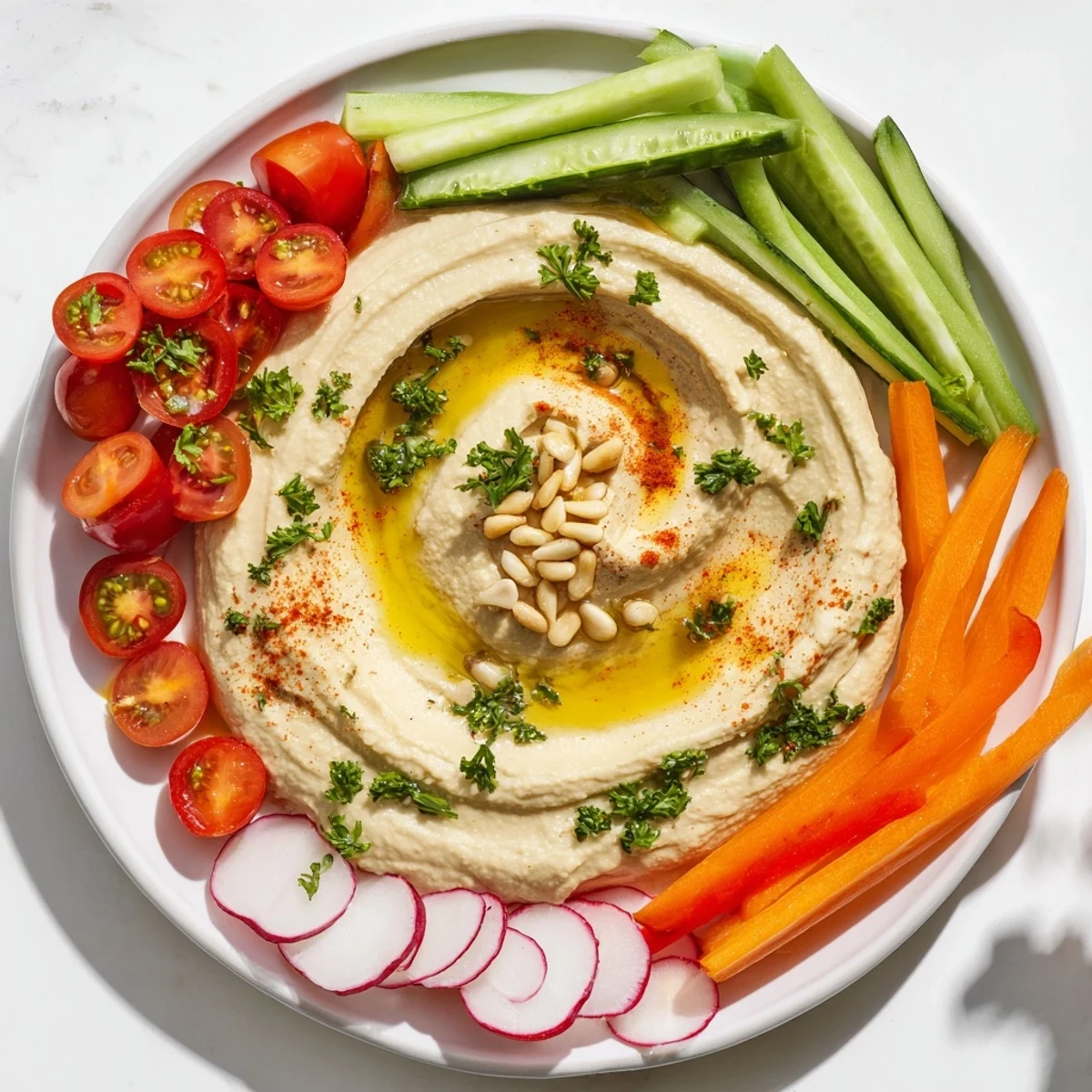
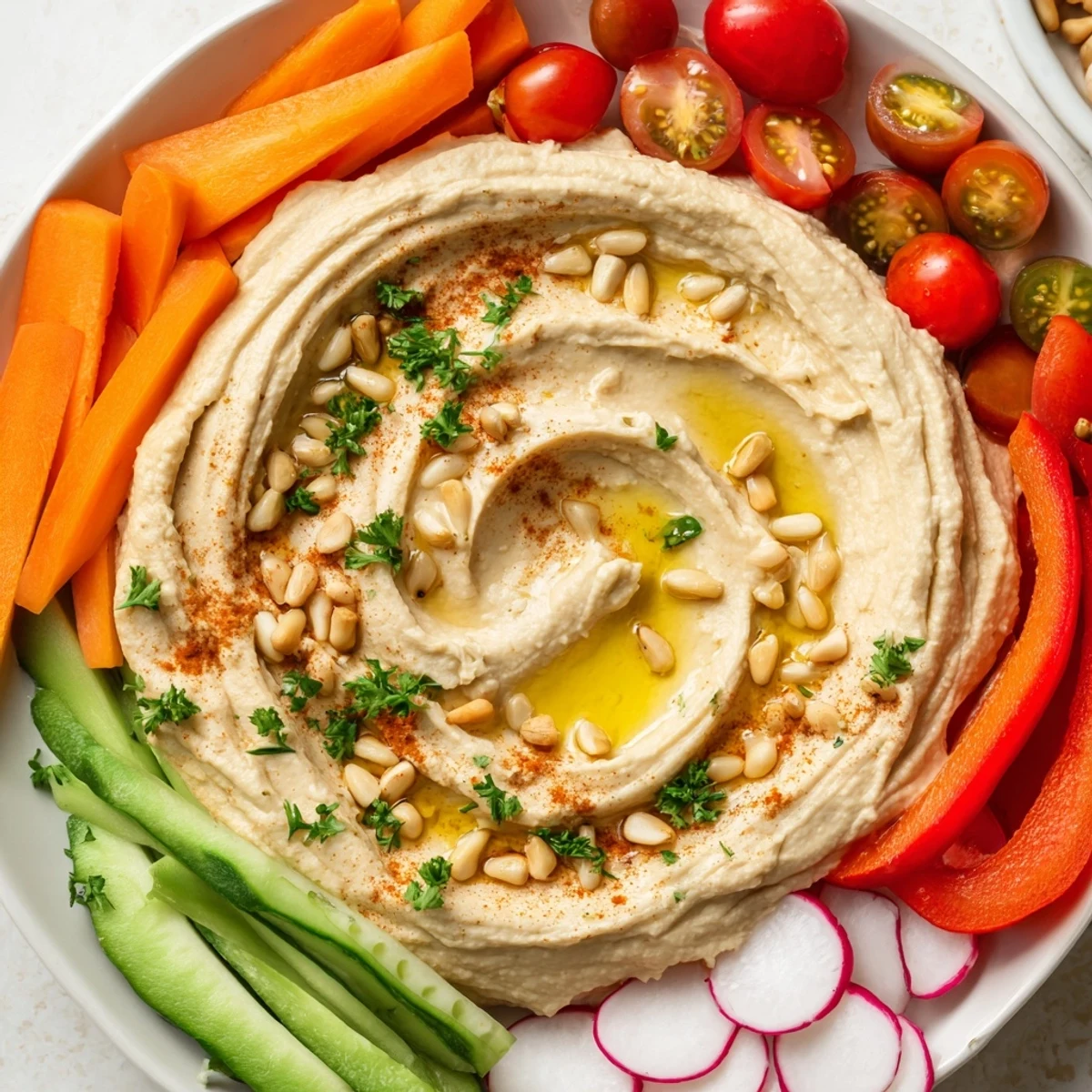
- Spoon the hummus onto a large serving plate and use the back of the spoon to create a shallow well with a spiral pattern. This not only looks professional but creates the perfect pool for olive oil to collect.
- Add the finishing touches:
- Drizzle with your best olive oil, then sprinkle with smoked paprika, fresh parsley, and toasted pine nuts if using. The contrast of colors against the creamy hummus makes it instantly appetizing.
- Arrange your rainbow:
- Place vegetables in sections around the hummus, alternating colors for the most striking presentation. I like to start with red tomatoes and work my way around in color wheel fashion.
 Save
Save My nephew, a notorious vegetable avoider, once hovered near this platter during a family gathering. I pretended not to notice as he cautiously dipped a carrot into the hummus, then a cucumber, then returned for seconds. His mother texted me later that hed asked why her vegetables never tasted that good, a victory I silently celebrate every time I make this platter.
Make-Ahead Options
One Tuesday morning, facing an evening meeting followed by hosting friends, I prepared the hummus and chopped all the vegetables before work. I stored everything separately in airtight containers with damp paper towels for the cut vegetables. When I rushed home at 6:30, assembly took just two minutes, and the platter looked like Id spent the afternoon in the kitchen instead of at my desk.
Customization Ideas
When my vegetarian sister started dating someone who loved spicy food, I added a kick to this platter by mixing harissa paste into half the hummus and keeping the original version on the other side. The dual-flavor approach became such a hit that now I often create hummus with two or three flavor zones, separating them with little barriers of vegetables like edible garden rows.
Serving Suggestions
During a summer cookout when the temperature hit 95 degrees, I brought this platter out early while the grill was heating up and noticed people lingering around it in the shade instead of the chips and dip in direct sunlight. The refreshing crunch of cold vegetables became the perfect counterpoint to the warm day, teaching me that timing and temperature contrast matter as much as flavors.
- For a complete spread, add a bowl of mixed olives and some warm pita triangles alongside the vegetables.
- If serving for dinner, pair with a simple grain salad like tabbouleh or bulgur with herbs for a light but satisfying meal.
- Keep extra cut vegetables in the refrigerator to refresh the platter if your gathering runs longer than expected.
 Save
Save This hummus platter reminds me that good food doesnt need to be complicated to bring people together. Whether for game day or any gathering, the simplicity and vibrancy of this spread creates a centerpiece that nourishes both body and conversation.
Recipe FAQs
- → Can I make the hummus ahead of time?
-
Yes, hummus can be prepared up to 3 days in advance and stored in an airtight container in the refrigerator. Add the olive oil drizzle and garnishes just before serving for the freshest presentation.
- → What vegetables work best for this platter?
-
Use a mix of colorful, crisp vegetables like cherry tomatoes, cucumbers, bell peppers, carrots, snap peas, and radishes. Choose seasonal produce for best flavor and freshness. Avoid vegetables that brown quickly or become soggy.
- → How do I achieve the perfect hummus consistency?
-
Blend the chickpeas and other ingredients until mostly smooth, then add cold water one tablespoon at a time while processing. The hummus should be creamy but hold its shape. Avoid over-processing, which can make it too thin.
- → Is this platter suitable for dietary restrictions?
-
This platter is naturally vegan and gluten-free as written. However, verify all label ingredients for potential cross-contamination. Tahini contains sesame, and pine nuts are tree nuts, which are common allergens to consider.
- → What garnishes can I use besides paprika and parsley?
-
Try drizzling pomegranate molasses, sprinkling sumac or za'atar, adding roasted chickpeas, or topping with fresh herbs like cilantro or mint. A sprinkle of chili flakes adds heat if desired.
- → Can I serve this with bread or crackers?
-
Absolutely. Serve alongside warm pita bread, whole grain crackers, or toasted bread chips. These additions provide different textures and make the platter more filling for a complete appetizer.