 Save
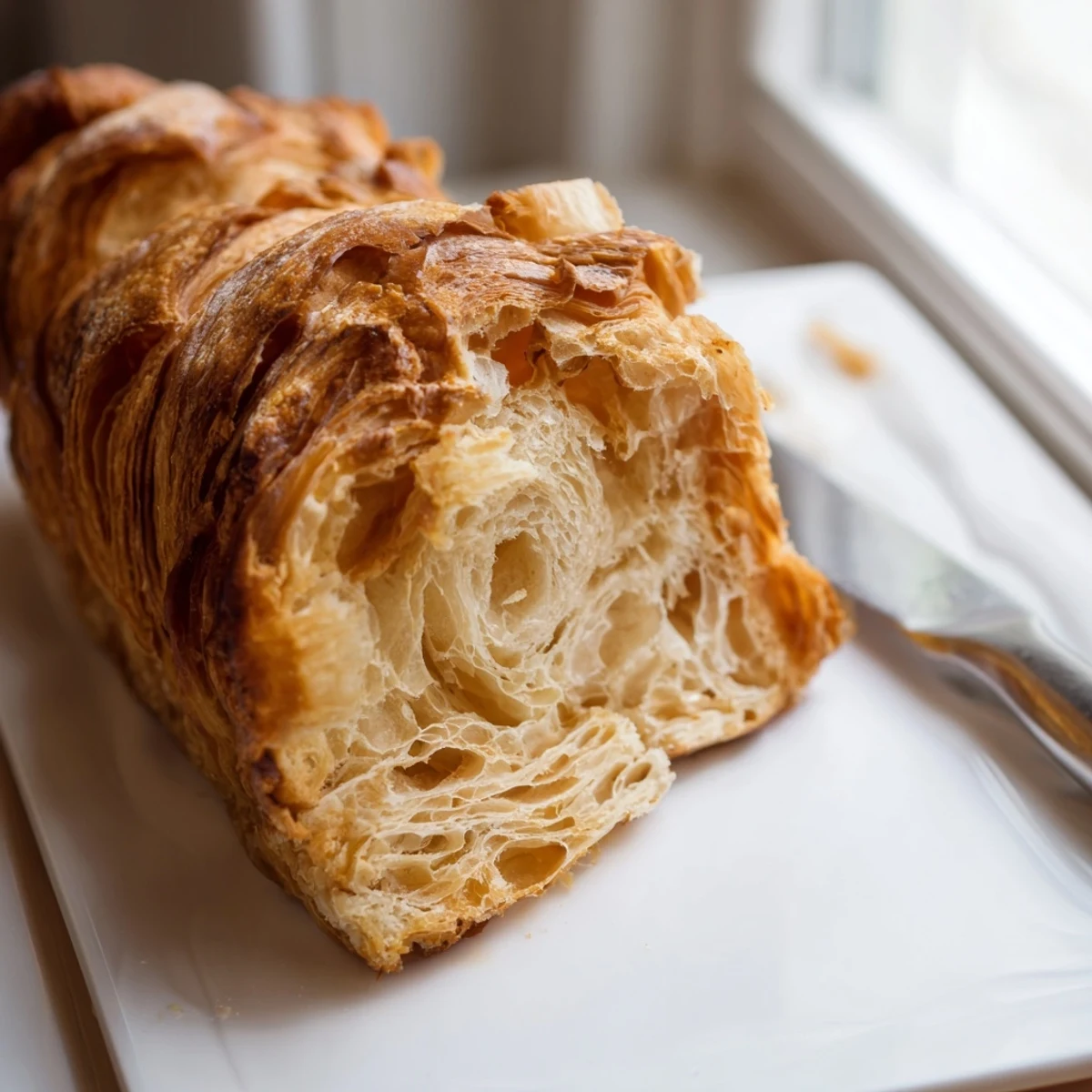
Save Craft a stunning French-inspired loaf that combines the buttery layers of traditional croissants with the convenience of a breakfast bread. Through a series of rolling and folding techniques, you'll create dozens of flaky layers that bake into golden perfection.
The process involves laminating cold butter into enriched dough, then rolling and folding multiple times to create those signature delicate layers. While it requires patience and chilling time, the result is an impressive showstopping bread that delivers the authentic croissant experience in sliceable form.
Last winter, when everything felt heavy and gray, I found myself standing at the counter at midnight, hands buried in flour, determined to master something that seemed impossible. My kitchen was freezing, but the warmth from the oven as I worked through the turns of butter and dough kept me company. There is something deeply satisfying about taking the most basic ingredients and turning them into something that feels like pure magic.
My sister came over unexpectedly while the dough was rising, and we ended up sitting at the kitchen table just watching the bowl, talking about everything and nothing. When the bread finally came out of the oven, golden and crackling, we tore into it while it was still too hot, burning our fingers but not caring one bit. That is the memory I return to whenever I start folding butter into dough.
Ingredients
- All purpose flour: The structure that holds all those buttery layers together, so do not swap it out
- Instant yeast: Keep it away from salt when mixing, or you will kill the yeast before it even starts working
- Whole milk: Lukewarm is the key word here, not hot enough to shock the yeast but warm enough to wake it up
- Unsalted butter: You need a full cup for the butter block, cold enough to shatter if you dropped it
- Eggs: One goes into the dough for richness, another becomes your golden finish
Instructions
- Mix the dough:
- Combine flour, sugar, salt and yeast in a large bowl, keeping yeast far from salt. Add the lukewarm milk, melted butter and one egg, mixing until a sticky dough forms.
- Knead and rise:
- Knead for seven to ten minutes until smooth and elastic, then let it rise in a greased bowl for one hour until doubled.
- First chill:
- Punch down the dough, shape it into a rectangle and refrigerate for thirty minutes to firm up slightly.
- Add the butter:
- Roll the dough into a twelve by sixteen inch rectangle and layer cold butter slices over two thirds of the surface.
- First fold:
- Fold the unbuttered third over the butter, then fold the remaining third over like a letter. Spin ninety degrees so the openings face you.
- Second fold:
- Roll again into a twelve by sixteen inch rectangle, fold into thirds, wrap and chill for thirty minutes.
- Complete the turns:
- Repeat the rolling, folding and chilling process two more times for a total of three turns, keeping everything cold.
- Shape the loaf:
- After the final chill, roll the dough to eight by sixteen inches and roll it tightly from the short edge into a loaf.
- Final rise:
- Place seam side down in a greased loaf pan, cover loosely and let rise until doubled, about one hour.
- Bake:
- Brush with egg wash, bake at three hundred seventy five degrees for thirty five to forty minutes until golden and hollow sounding.
 Save
Save This bread has become my go to for special occasions, but honestly, the best times have been the ordinary Tuesday mornings when I wake up to find my partner already toasting a slice, butter melting into all those layers. It turns breakfast into something that feels like a celebration, even when there is nothing to celebrate except being together.
Temperature Control Secrets
The difference between croissant bread that shatters into perfect shards and one that turns into a dense loaf comes down to temperature. Work quickly during the folding steps, and if you feel the dough becoming soft or sticky, trust your instincts and pop it back in the fridge for fifteen minutes. Cold butter creates distinct layers, while warm butter just absorbs into the dough.
Getting The Perfect Rise
Find the warmest spot in your kitchen for the final rise, but avoid direct sunlight or areas that are too hot. I have found that the top of my refrigerator, where the gentle heat from the motor creates a consistent microclimate, works beautifully. You want the dough to almost crest over the top of the pan for that impressive bakery style look.
Serving And Storage
This bread is best served the day it is made, when the exterior still has that satisfying crispness. For later days, I highly recommend toasting each slice to revive some of the original texture. Store it wrapped in parchment paper rather than plastic, which lets the crust breathe just enough to maintain its character.
- Leftovers make extraordinary French bread pudding
- Slice and freeze individual portions for quick weekday breakfasts
- Serve alongside strong coffee and fresh fruit for the simplest brunch
 Save
Save There is something profound about creating something so beautiful from nothing but flour, butter and patience. May your kitchen be warm and your layers be many.
Recipe FAQs
- → What makes croissant bread different from regular bread?
-
Croissant bread uses lamination, where cold butter is folded into the dough multiple times. This creates distinct flaky layers similar to traditional croissants, whereas regular bread has a uniform crumb structure throughout.
- → Can I reduce the preparation time?
-
The rolling and folding process is essential for creating flaky layers. However, you can complete the folds back-to-back with minimum 30-minute chilling periods. Rushing the chilling causes butter to melt, preventing proper lamination.
- → Why must the butter remain cold?
-
Cold butter creates separate layers within the dough as it melts during baking. If butter warms during folding, it absorbs into the flour instead of forming distinct layers, resulting in a denser bread rather than flaky texture.
- → How do I know when the bread is fully baked?
-
The loaf should sound hollow when tapped on the bottom, and the crust will be deep golden brown. An instant thermometer inserted into the center should read at least 190°F (88°C) for thorough doneness.
- → Can I add sweet or savory variations?
-
Absolutely. Sprinkle cinnamon sugar before rolling for sweetness, or incorporate herbs, cheese, or garlic into the butter layers for savory versions. The basic laminated dough adapts well to various flavor additions.
- → How should I store leftovers?
-
Wrap completely cooled bread tightly in plastic or store in an airtight container at room temperature for 2-3 days. For longer storage, slice and freeze individually, then toast directly from frozen.