
 Save
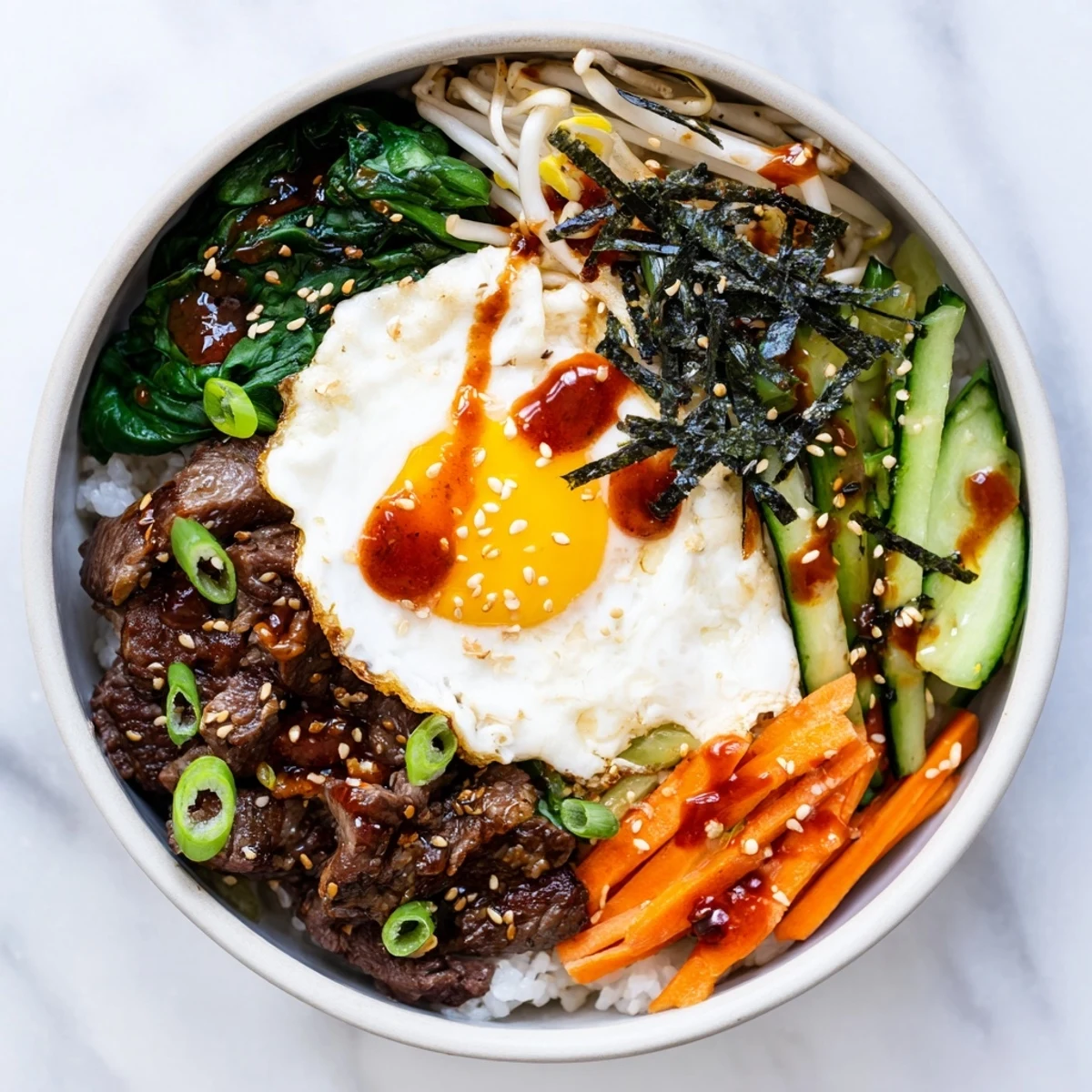
Save This hearty morning bowl combines thinly sliced marinated beef, quick-sautéed spinach, fresh julienned carrots, crisp cucumber, and blanched bean sprouts arranged over warm short-grain rice. A sunny-side-up egg with a golden runny yolk crowns the center, while the signature gochujang sauce adds layers of sweet, spicy, and savory flavors. The entire dish comes together in just 40 minutes, making it perfect for a satisfying weekend brunch or meal prep.
I stumbled onto this breakfast creation during a particularly ambitious weekend meal prep session. I had leftover rice from takeout and half a marinade sitting in the fridge, so I threw them together without much thought. The first bite stopped me in my tracks—sweet, spicy, savory all at once. Now it is the only breakfast I actually crave on Saturday mornings.
My roommate walked in while I was assembling the bowls and asked if I was making bibimbap. I admitted I had no idea what I was doing, just following my gut. We ended up eating standing up at the counter, forks dueling for the last slices of beef. That bowl cemented my reputation as the breakfast innovator of the apartment.
Ingredients
- Thinly sliced beef sirloin or ribeye: I learned the hard way that freezing the meat for 20 minutes makes paper-thin slicing so much easier
- Soy sauce and sesame oil: This combo forms the backbone of Korean marinades—do not skip the sesame oil
- Brown sugar: Balances the salt and helps the beef caramelize beautifully in the pan
- Fresh garlic and ginger: Grate the ginger on a microplane to avoid those fibrous chunks
- Baby spinach: Wilts down to almost nothing, so do not be shy with the handfuls
- Bean sprouts: Add an incredible crunch that holds up even after the hot sauce hits them
- Cooked short-grain rice: The sticky texture is essential—it needs to cling to every ingredient
- Gochujang: This fermented chili paste is worth seeking out, but sriracha works in a pinch
- Honey: Tames the heat just enough so you can actually taste the layers
- Toasted sesame seeds: Throw them in a dry pan for 30 seconds to wake up their nutty flavor
Instructions
- Marinate the beef:
- Whisk together soy sauce, sesame oil, brown sugar, garlic, ginger, and rice vinegar in a bowl. Toss the sliced beef until every piece is coated, then let it sit while you prep everything else. The acid in the vinegar starts breaking down the protein immediately.
- Sear the meat:
- Heat your skillet until it is seriously hot. Cook the beef in batches so the pan does not crowd. Let each slice develop a dark brown crust before flipping. The sugar will help create that gorgeous caramelized exterior.
- Prep the vegetables:
- Give the spinach a quick toss in the hot pan just until it collapses. Blanch the bean sprouts for literally one minute so they stay snappy. Julienned carrots and cucumber go in raw—they provide a cool, crisp contrast to the warm beef.
- Fry the eggs:
- Use plenty of oil and keep the heat at medium. The whites should be fully set with crispy, lacy edges. A runny yolk is non-negotiable here. It becomes the rich binder that pulls everything together when you dig in.
- Whisk the sauce:
- Mix gochujang, honey, water, sesame oil, and rice vinegar until completely smooth. The consistency should be drizzle-able, not thick like paste. Add water one teaspoon at a time if it feels too stiff.
- Assemble your bowl:
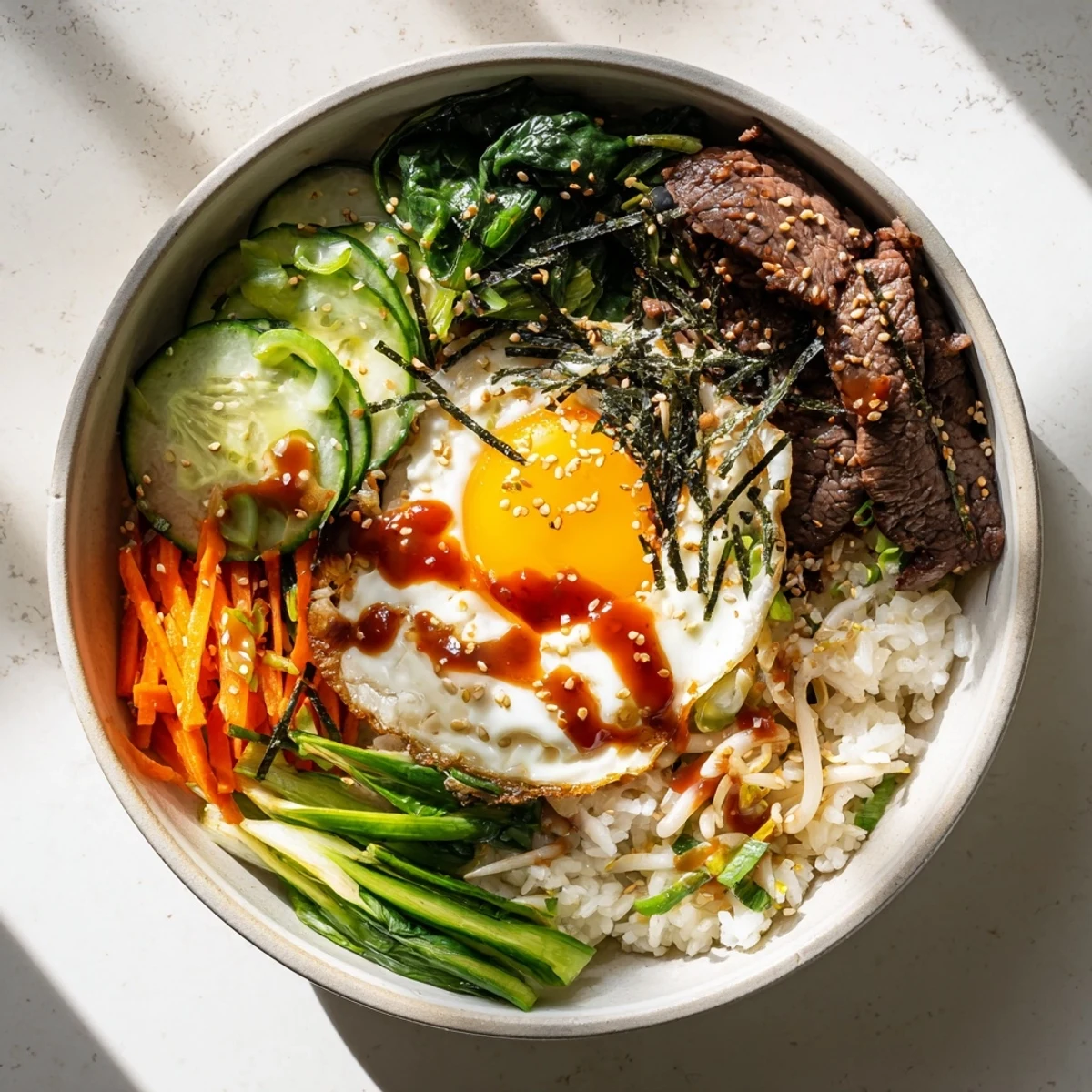
- Start with a bed of warm rice. Arrange each ingredient in its own little section like a clock face. Egg goes dead center. Drizzle the sauce in a pattern across the top. Sprinkle sesame seeds like you are finishing a restaurant dish.
 Save
Save I served this to my parents on their last visit and my dad asked for the recipe before he even finished eating. He said it reminded him of the Korean place we discovered together years ago. That accidental connection made the whole morning feel special.
Building a Better Bowl
The secret to restaurant-style presentation is treating each ingredient as its own component. Do not toss everything together in the pan. Let the colors and textures shine separately. That moment before the first mix is almost too pretty to disturb.
Make-Ahead Magic
I marinate double batches of beef and freeze them in flat freezer bags. The morning of, I just thaw and sear. The vegetables can all be prepped the night before and stored in airtight containers. Assembly takes five minutes when everything is waiting for you.
Saucing Strategy
Mix the sauce while the beef marinades so the flavors have time to meld. Taste it after 10 minutes. The gochujang needs time to mellow out. If it tastes too sharp, let it sit longer. If it needs more heat, add a tiny pinch of red pepper flakes.
- Keep extra sauce in a jar in the fridge for up to two weeks
- The flavor actually improves after a few days
- Stir well before using since the sesame oil separates
 Save
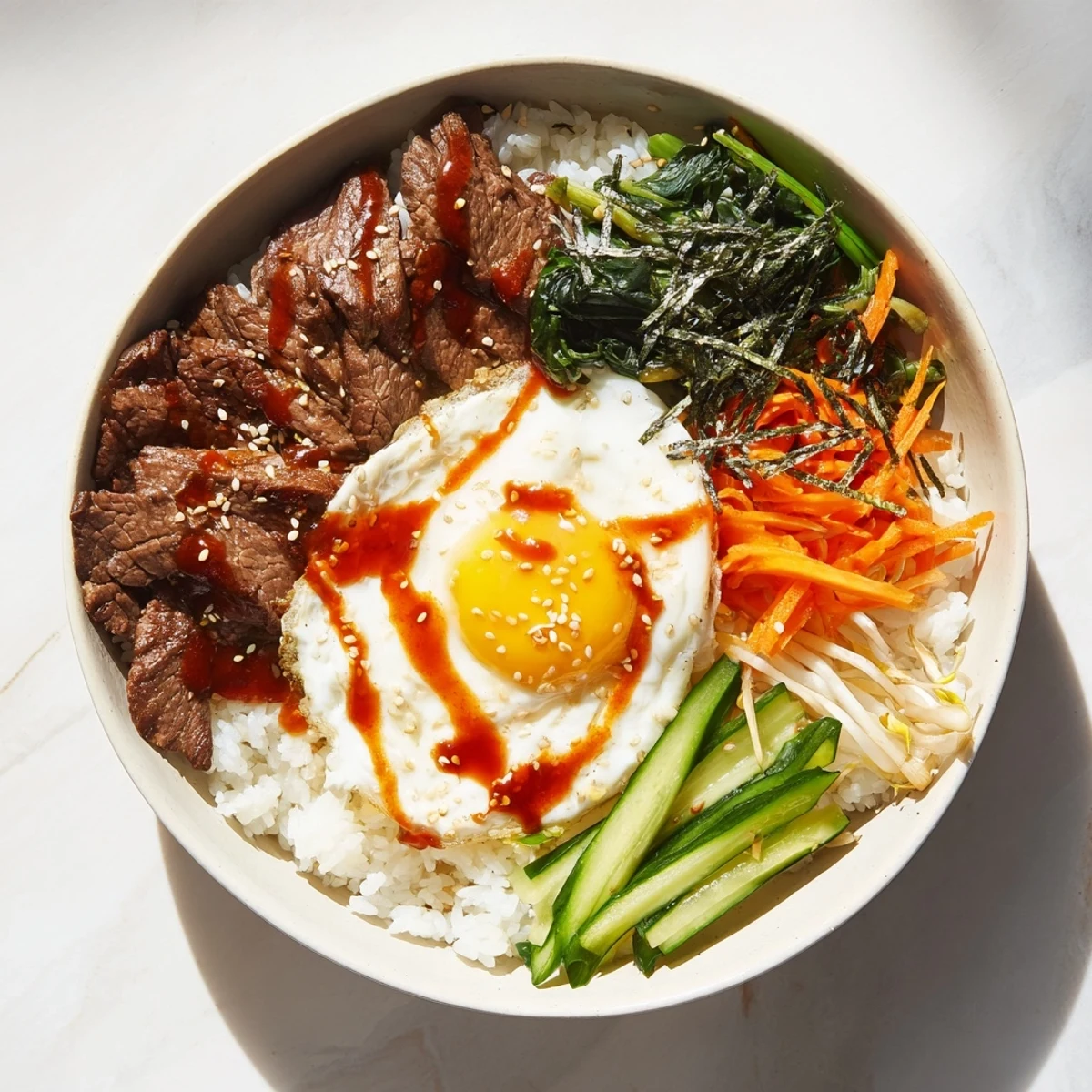
Save This bowl has become my go-to for weekend brunch with friends. Everyone gets to customize their own creation, and the kitchen always smells like caramelized beef and sesame oil.
Recipe FAQs
- → Can I prepare this ahead of time?
-
Yes, you can marinate the beef overnight and prepare the vegetables in advance. The gochujang sauce keeps well in the refrigerator for up to two weeks. Assemble bowls fresh and fry eggs just before serving.
- → What protein alternatives work well?
-
Thinly sliced pork chicken thighs or tofu make excellent substitutes. For vegetarian versions, use marinated mushrooms or extra-firm tofu prepared the same way as the beef.
- → How can I adjust the spice level?
-
Reduce the gochujang in the sauce or add more honey to balance the heat. For extra spice, add gochugaru (Korean chili flakes) or sliced fresh chilies as garnish.
- → Is brown rice acceptable?
-
Absolutely. Brown rice adds nutty flavor and extra fiber, though it will require a longer cooking time. Mixed grain rice or quinoa also work beautifully as base options.
- → What other vegetables can I include?
-
Zucchini, radish, bell peppers, or pickled daikon add variety and crunch. Quick-pickled vegetables complement the rich beef and spicy sauce perfectly.