
 Save
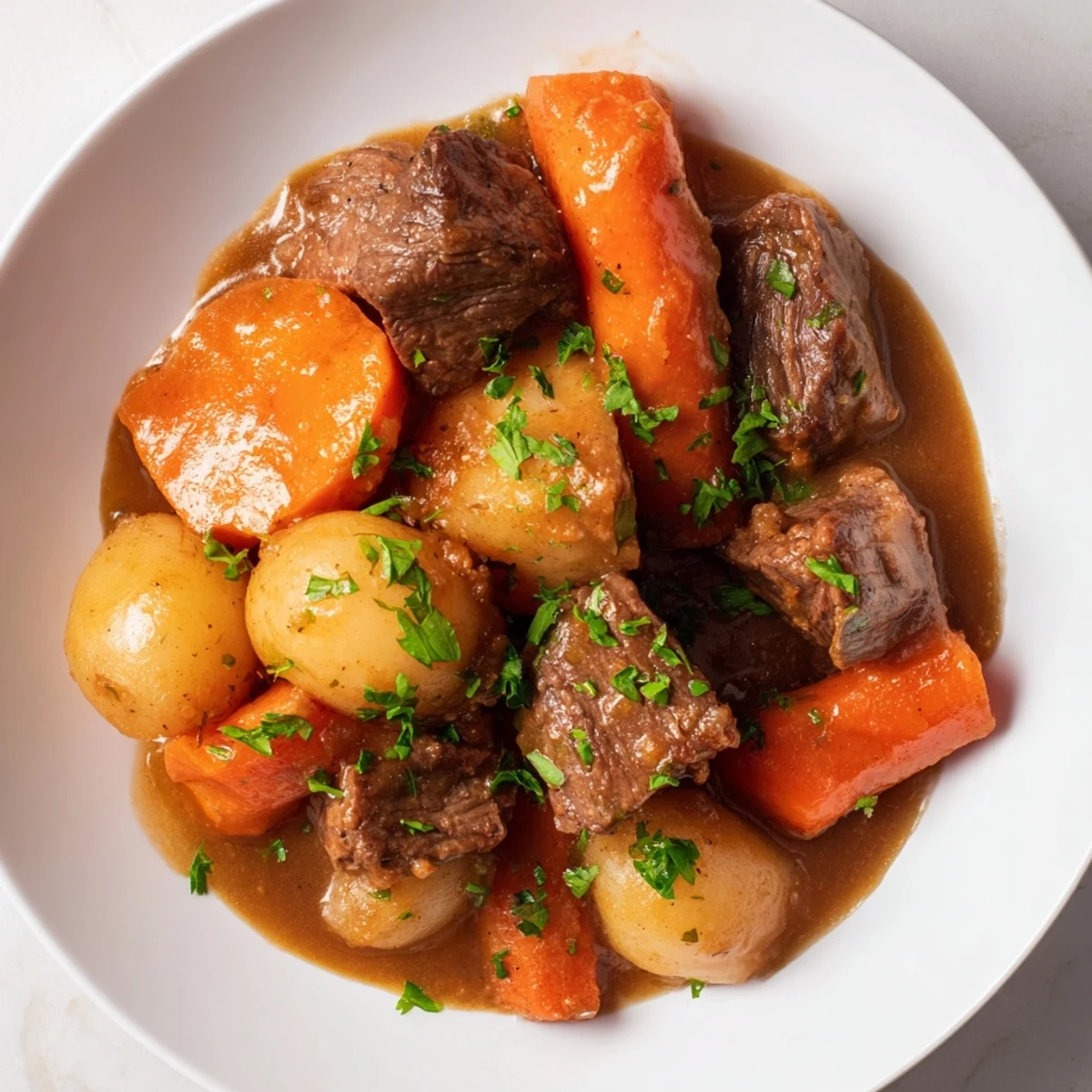
Save This dish features tender beef simmered alongside potatoes, carrots, onion, garlic, and celery in a flavorful broth enriched with tomato paste, herbs, and a splash of red wine. Slow cooking melds these ingredients into a warm, hearty dish perfect for family meals. A cornstarch slurry is used near the end to achieve a luscious, thickened consistency. Fresh parsley adds brightness before serving. Ideal for an effortless, comforting main course with rich depth.
There's something about the smell of beef browning in a hot skillet that stops me mid-afternoon every time. Years ago, a friend mentioned she'd been making beef stew in her slow cooker all day while at work, and I remember thinking that sounded like pure magic—coming home to a house that smelled like a cozy bistro. That first attempt was clumsy; I nearly burned the beef because I didn't know you could brown it in batches, but something about that process clicked. Now, this stew is my answer to almost everything: a rough day, a crowded table of hungry people, or just the need to fill the house with warmth.
I made this for my sister when she moved into her first apartment with nothing but a hot plate and desperation. She called it "the stew that made me feel less alone," which sounds dramatic until you realize a slow cooker in a new city is basically an act of kindness to yourself. We ate it straight from the pot, standing in her empty kitchen, and it became this running joke between us—the recipe that proved you don't need much to make something that matters.
Ingredients
- Beef chuck (2 lbs, cut into 1.5-inch cubes): This cut has just enough fat and connective tissue to become silky instead of stringy after hours of slow cooking—don't use lean cuts or you'll end up with something tough and sad.
- Potatoes (4 medium, cut into 1-inch pieces): Cut them uniform so they finish cooking at the same time; I learned this the hard way when half were mush and half were still firm.
- Carrots (4 large, sliced into 1-inch rounds): They add natural sweetness and color; thicker slices hold their shape better than thin ones.
- Onion, garlic, and celery (1 large onion, 3 cloves garlic, 2 stalks celery): These build the flavor foundation and practically dissolve into the broth, creating depth without being noticeable.
- Beef broth (4 cups): Use a good-quality broth if you can; the stew is only as good as your liquid.
- Dry red wine (1/2 cup, optional): It adds complexity and cuts through the richness, though the stew works perfectly without it.
- Tomato paste (2 tbsp): This small amount darkens the broth and adds umami without making it taste tomatoey.
- Dried thyme and rosemary (1 tsp each), bay leaves (2), salt, pepper, and Worcestershire sauce (2 tbsp): Together these create a savory, almost meaty depth that tastes like you've been cooking all day.
- Cornstarch slurry (2 tbsp cornstarch mixed with 2 tbsp cold water): Stir this in near the end to thicken the broth without making it gluey.
- Fresh parsley (2 tbsp, optional): A small handful sprinkled on top brings freshness and reminds people there are actual vegetables in here.
Instructions
- Brown the beef (optional but worth it):
- Heat a large skillet over medium-high heat and work in batches, searing the beef cubes for 2-3 minutes on each side until they're golden and caramelized. This isn't mandatory, but it adds a deep, savory layer that makes people ask what your secret is. Transfer the browned beef straight to the slow cooker.
- Build the base:
- Add the potatoes, carrots, onion, garlic, and celery to the slow cooker around the beef. They'll sink and layer as everything cooks, creating little pockets of flavor.
- Mix the broth mixture:
- In a bowl, whisk together the beef broth, red wine (if using), tomato paste, thyme, rosemary, bay leaves, salt, pepper, and Worcestershire sauce. Pour this over everything and give it a gentle stir—you want the vegetables to stay somewhat distinct.
- Let time do the work:
- Cover and set the slow cooker to LOW for 8 hours or HIGH for 4-5 hours. The longer, gentler cook makes the beef nearly dissolve into tenderness. Resist the urge to open the lid; every peek releases heat and prolongs cooking.
- Thicken near the finish:
- About 30 minutes before serving, mix cornstarch and cold water into a smooth slurry and stir it into the stew. This thickens the broth just enough so it clings to the vegetables instead of pooling at the bottom. Fish out the bay leaves.
- Taste and serve:
- Give the stew a final taste and adjust salt and pepper as needed. Ladle into bowls and finish with a scatter of fresh parsley if you have it.
 Save
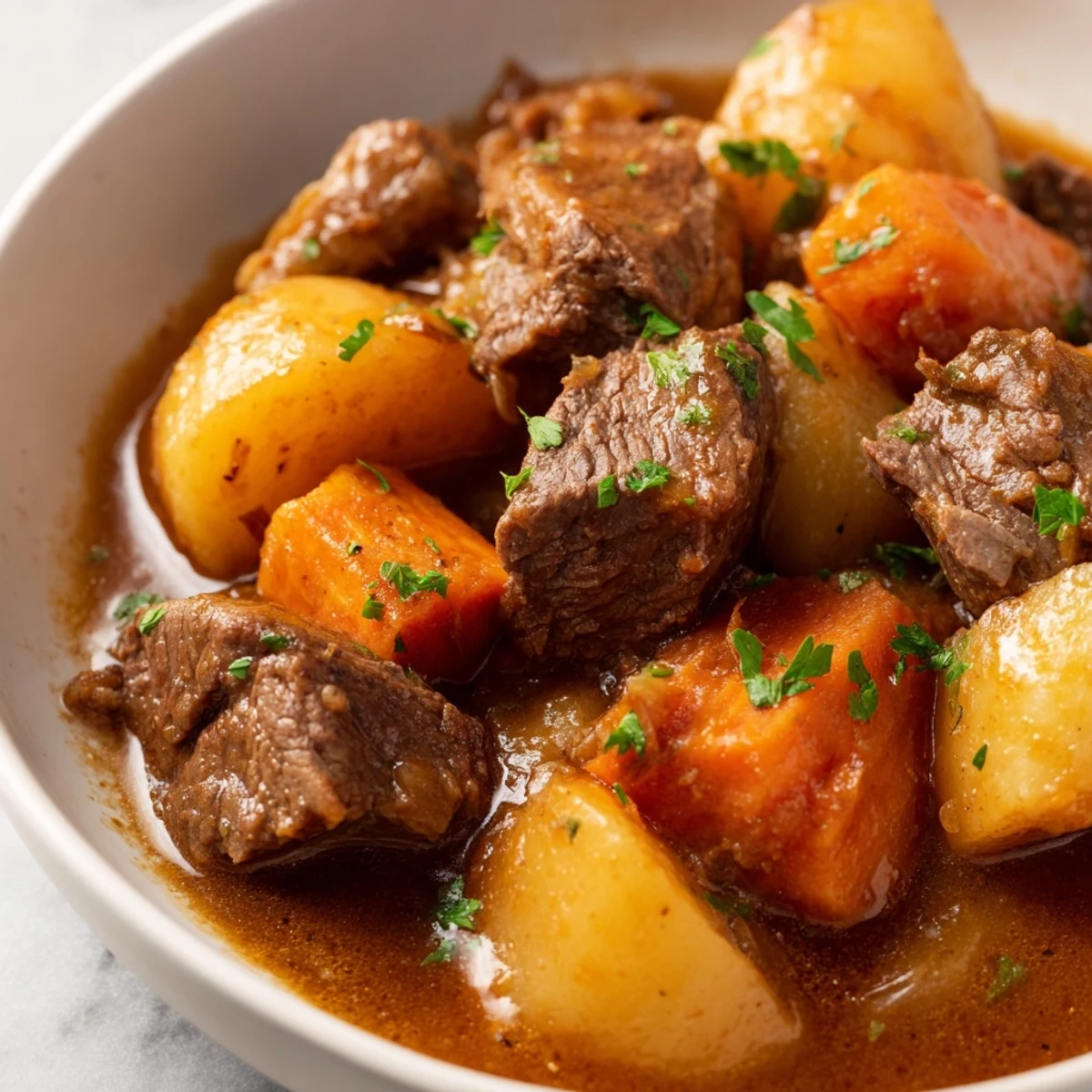
Save This stew sits at the center of my kitchen mythology. It's what I make when someone needs feeding, when I need comfort, when I want to prove to myself that good food doesn't require effort—just time and patience. There's something almost meditative about setting a slow cooker in the morning and knowing dinner will be ready and waiting.
Why Slow Cooking Beef Stew Changes Everything
The slow cooker isn't lazy cooking; it's the opposite. Low, steady heat breaks down the tough connective tissue in beef chuck and turns it into gelatin that makes the whole stew silky and luxurious. Vegetables cook gently enough that they don't turn to mush, and flavors have hours to get to know each other. It's alchemy, basically, but one you can set and forget.
Variations and Personal Touches
This stew is flexible enough to become whatever your kitchen and mood demand. I've added swapped sweet potatoes for regular ones (they get sweeter and almost creamy), tossed in frozen peas during the last 30 minutes of cooking for bright color, or stirred in a splash of balsamic vinegar at the very end for a subtle tang that somehow makes everything taste richer. I once accidentally doubled the garlic and didn't tell anyone—they complimented the depth and complexity. The point is, this recipe is a foundation, not a rulebook.
Serving and Pairing
I serve this stew in wide, shallow bowls with crusty bread for soaking up every last drop of broth. A robust red wine alongside it (the same kind you cooked with, if you used it) is perfect—the wine's acidity cuts through the richness while the stew softens the wine's edges. Sometimes I'll offer grated cheese or a dollop of sour cream on the side, though honestly, the stew is complete on its own.
- Make double and freeze half in portions for nights when you need dinner without thinking.
- Leftovers taste even better the next day as flavors continue to meld.
- Reheat gently on the stovetop, adding a splash of broth if it's thickened too much while sitting.
 Save
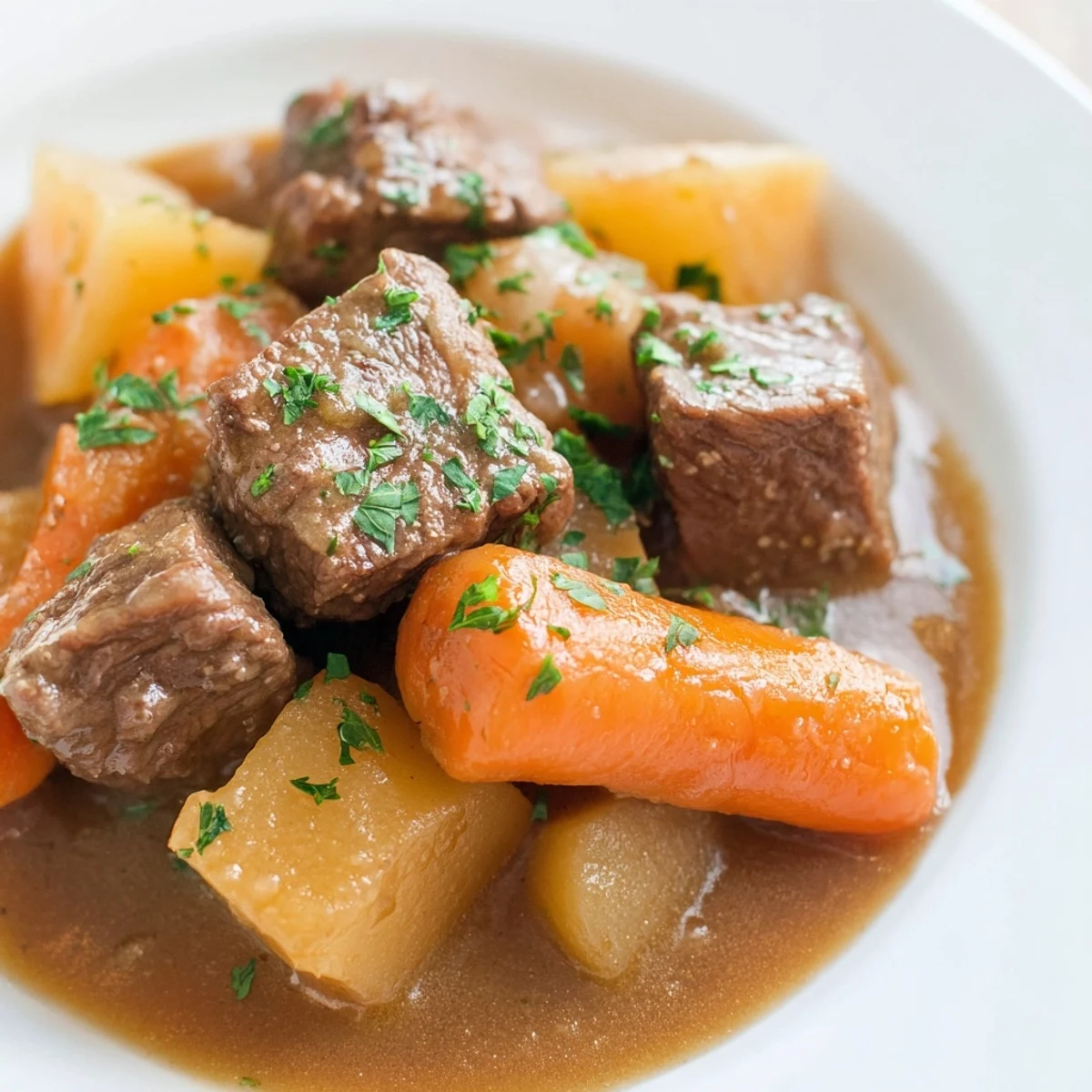
Save This stew has fed my family through winters, given me something to offer when words weren't enough, and taught me that the best meals are the ones that taste like they came from love rather than effort. Make it, and make it again.
Recipe FAQs
- → How do I ensure the beef is tender?
-
Browning the beef cubes before slow cooking seals in juices and adds flavor. Cooking the stew on low heat for 8 hours allows the meat to become tender and flavorful.
- → Can I substitute vegetables in this dish?
-
Yes, sweet potatoes can replace regular potatoes for a different taste. Peas can be added in the last 30 minutes for added color and sweetness.
- → What thickening options are used?
-
A mixture of cornstarch and cold water is stirred into the stew near the end of cooking to thicken the broth for a rich texture.
- → Is red wine necessary for flavor?
-
Red wine enhances the savory depth but is optional. It can be omitted without compromising the overall dish.
- → How can I add extra freshness to the finished dish?
-
Chopped fresh parsley sprinkled just before serving adds a bright, fresh note balancing the hearty stew flavors.