
 Save
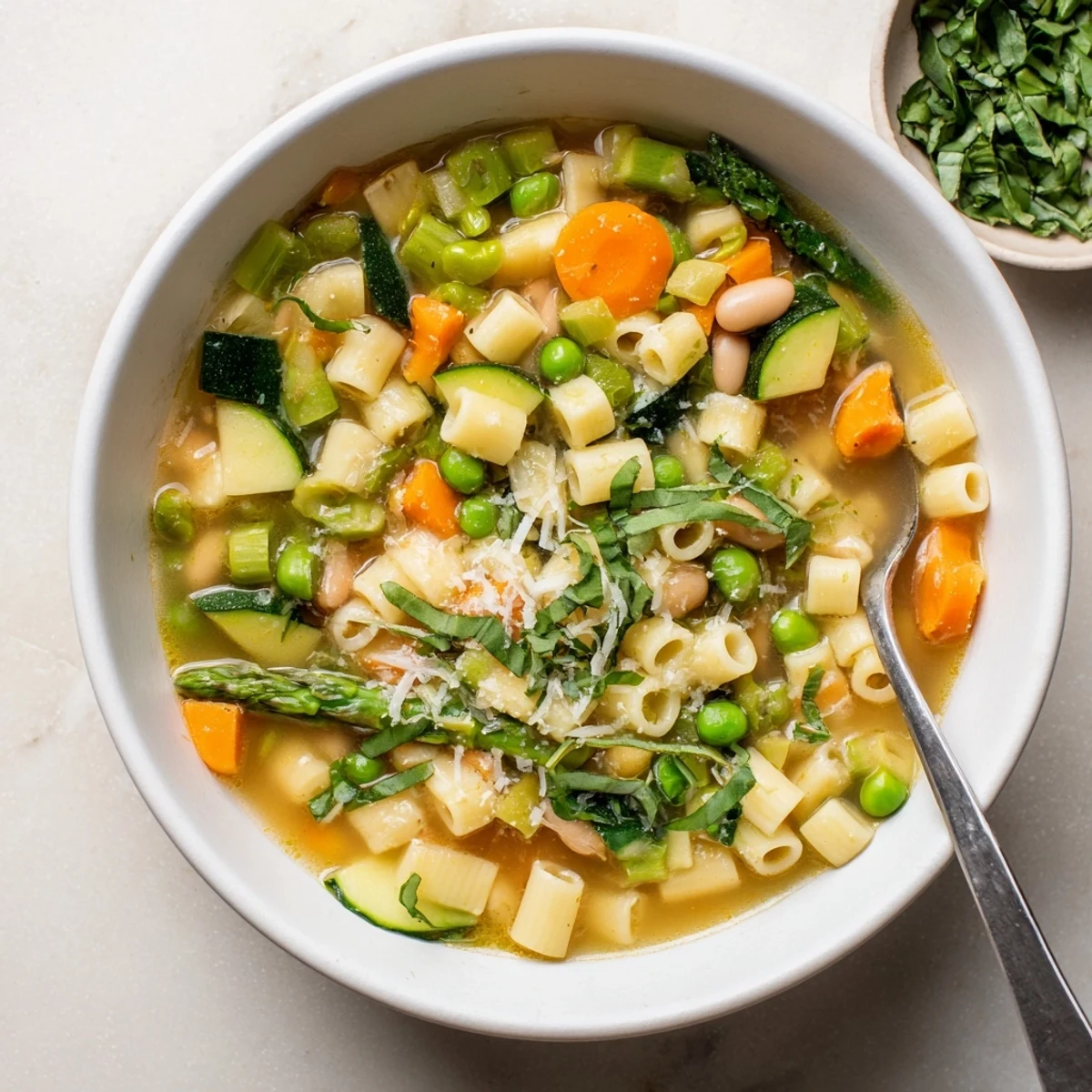
Save This spring minestrone brings together asparagus, zucchini, peas, and baby spinach in a light vegetable broth with cannellini beans and small pasta. Finished with fresh basil, parsley, and a splash of lemon juice, it comes together in under 45 minutes. The soup is naturally vegetarian, easily made vegan by skipping the optional Parmigiano Reggiano, and pairs beautifully with crusty bread and a glass of Pinot Grigio.
My neighbor Anna used to leave a covered bowl of minestrone on my doorstep every April without warning, and one taste always told me she had been to the farmers market that morning. The broth was never heavy, never murky, just this impossibly bright green-gold liquid swimming with the tiniest pasta shapes you could find. I begged for the recipe for three straight springs before she finally scribbled it on the back of a grocery receipt.
I made this for a book club one rainy afternoon when everyone showed up expecting something heavy and cheese-laden. Instead they got these delicate bowls of spring green soup, and the room went completely quiet for a full minute after the first spoonfuls. Someone actually said it felt like eating a garden.
Ingredients
- Olive oil: A good extra virgin matters here since the fat carries every delicate spring flavor, so skip the cheap stuff
- Onion, finely chopped: Keep the pieces small so they melt into the broth rather than sitting in identifiable chunks
- Garlic cloves, minced: Two cloves give gentle warmth without overpowering the vegetables
- Carrots, diced: These add natural sweetness and a beautiful orange fleck throughout the soup
- Asparagus, cut into 1-inch pieces: Use the tender stalks only and snap off the woody ends by hand
- Zucchini, diced: Small cubes cook evenly and hold their shape instead of turning to mush
- Shelled fresh or frozen peas: Fresh peas make a shocking difference if you can find them
- Baby spinach: Added at the very end so it stays vivid green and tender
- Vegetable broth: Use a low-sodium version so you control the seasoning completely
- Cannellini beans, drained and rinsed: These make the soup substantial enough to stand as a main dish
- Small pasta: Ditalini is traditional but orzo works beautifully too
- Salt and black pepper: Season gradually and taste after the lemon goes in
- Fresh basil and parsley, chopped: Do not substitute dried herbs here, they will let you down
- Fresh lemon juice: This single tablespoon wakes up every flavor in the pot
- Grated Parmigiano Reggiano: Optional but honestly it pushes the soup from great to unforgettable
Instructions
- Build the base:
- Heat olive oil in a large pot over medium heat, add the chopped onion, and let it soften for about 3 minutes until it turns translucent and fragrant.
- Add the aromatics:
- Stir in the minced garlic and diced carrots, cooking for 2 to 3 minutes until you can smell the garlic without any bitterness.
- Introduce the spring vegetables:
- Add the asparagus, zucchini, and peas, stirring occasionally for about 2 minutes so everything gets coated in the oil.
- Simmer with broth:
- Pour in the vegetable broth, bring it to a boil, then add the cannellini beans and pasta before reducing to a gentle simmer with the lid on for 8 to 10 minutes until everything is tender.
- Finish with greens and herbs:
- Stir in the baby spinach, chopped basil, and parsley, cooking just 1 to 2 minutes until the spinach wilts but stays bright green.
- Season and serve:
- Remove from heat, stir in the lemon juice, adjust salt and pepper to taste, then ladle into bowls with Parmigiano Reggiano on top if you are using it.
 Save
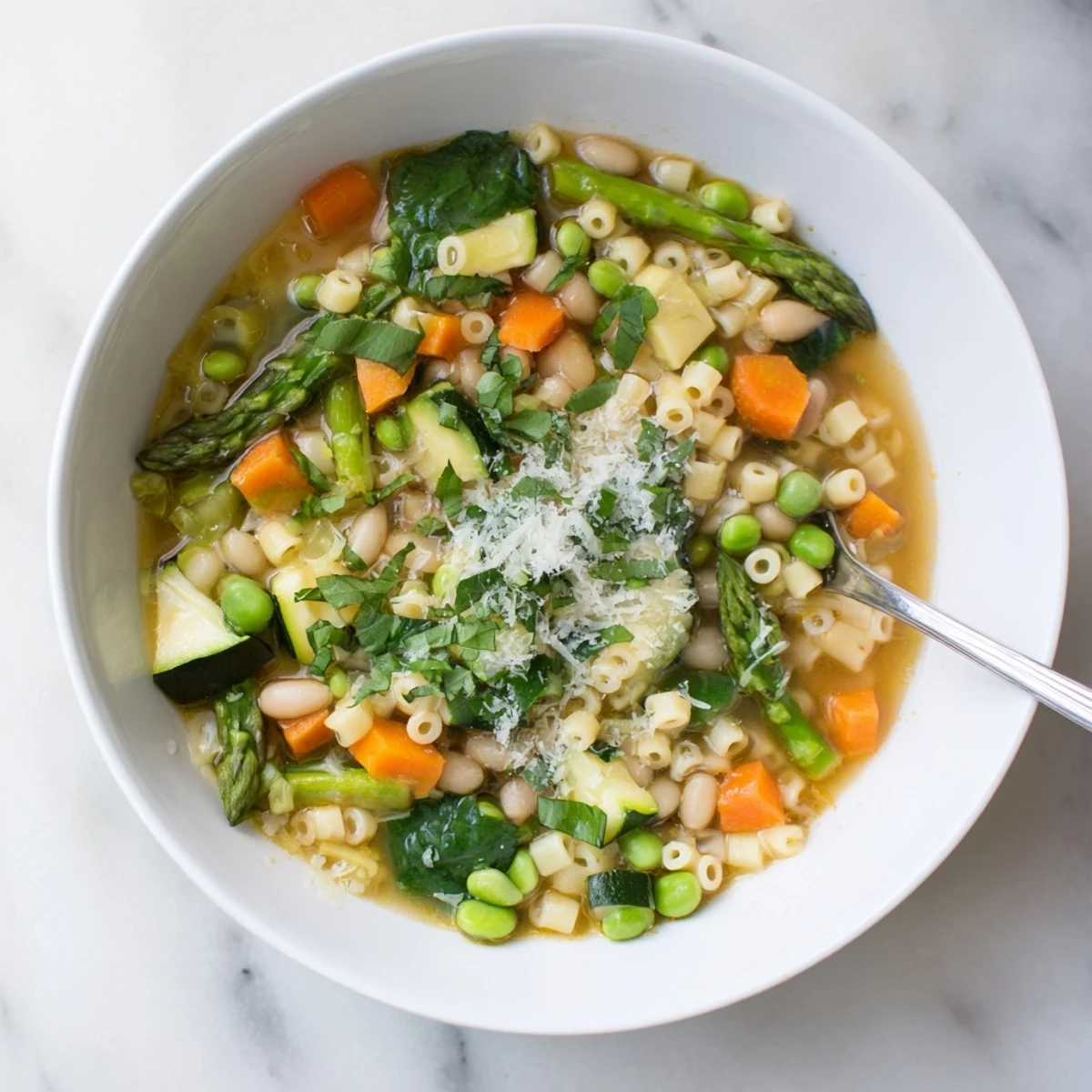
Save This soup became my go-to meal the spring after my daughter was born, when cooking felt like a monumental task but I still wanted something nourishing on the table. I could chop the vegetables during a nap window and have the whole thing done in under an hour with one hand.
Picking the Right Vegetables
The magic of this recipe is flexibility, and I have swapped in fava beans, green beans, and even tender leek rounds with great success. The only rule I follow is keeping everything in roughly the same size so no single vegetable dominates a spoonful.
Broth Matters More Than You Think
I once made this with a generic store-brand broth and the whole pot tasted flat despite perfect seasoning. A quality vegetable broth, or even better a homemade one, provides a foundation that lets every spring vegetable shine through clearly.
Serving It Like an Italian
Anna always served minestrone with a chunk of crusty bread resting right on the rim of the bowl and a small glass of Pinot Grigio nearby. It turned a simple soup into an entire evening.
- Use the crustiest bread you can find because you will want to drag it through the broth
- Keep the Parmigiano on the side so guests can decide their own amount
- A drizzle of good olive oil on top right before serving adds a silky finish
 Save
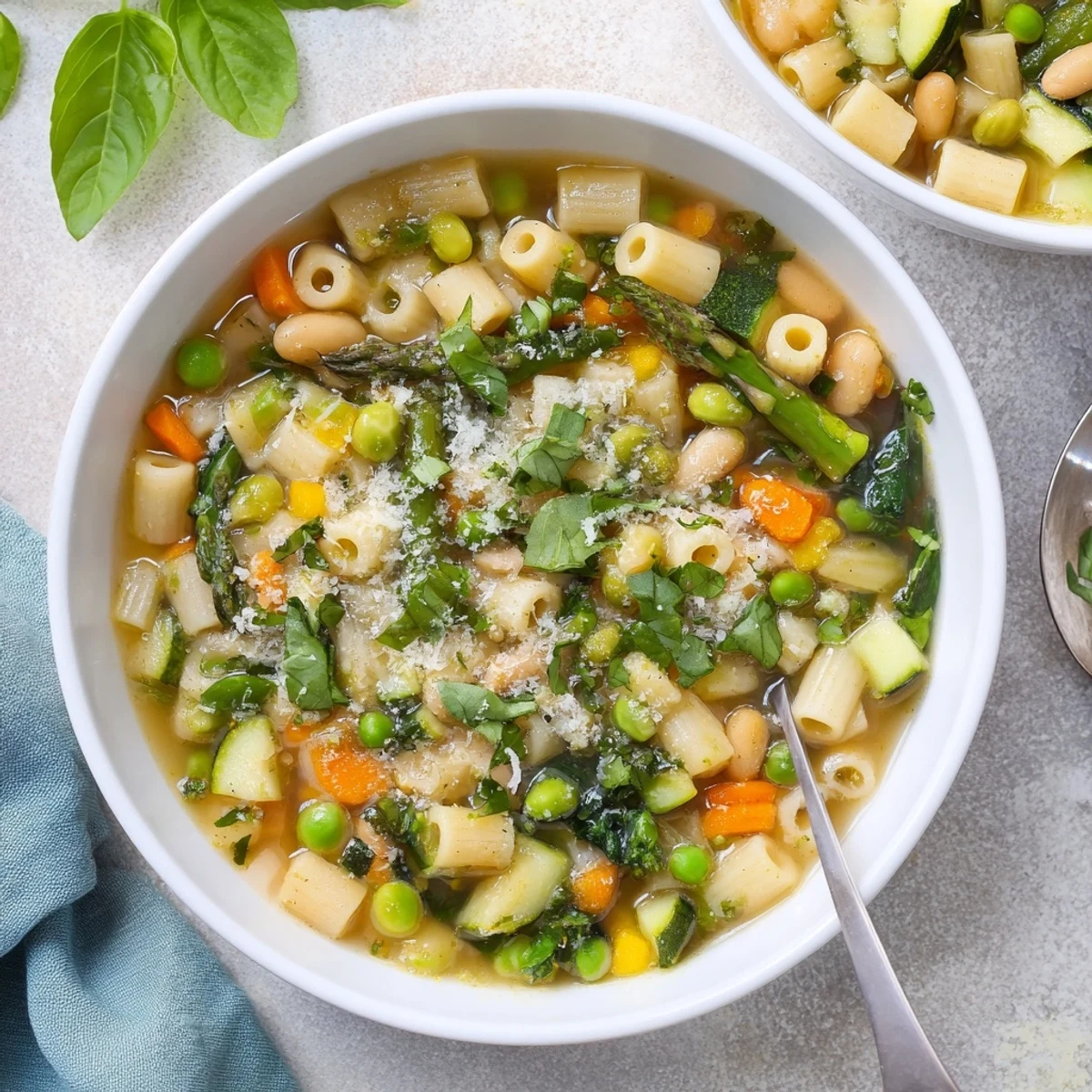
Save Every spring I make this soup and think of Anna, who moved away years ago but left behind a recipe that still makes my kitchen smell like April. Some of the best things we cook come with no instructions at all, just a quiet bowl on a doorstep.
Recipe FAQs
- → Can I make this minestrone ahead of time?
-
Yes, the soup stores well in the refrigerator for up to 3 days. Keep the pasta separate if possible, as it will continue to absorb broth and soften. Reheat gently on the stove and add fresh herbs before serving.
- → What pasta works best in minestrone?
-
Small shapes like ditalini, orzo, tubettini, or small shells work best because they spoon easily and cook quickly. Use gluten-free pasta if needed—just check the package timing to avoid overcooking.
- → How do I make this vegan?
-
Simply skip the Parmigiano Reggiano garnish or replace it with a plant-based cheese alternative. All other ingredients—olive oil, vegetables, beans, and pasta—are already vegan-friendly.
- → Can I freeze spring minestrone?
-
The soup freezes well for up to 2 months, though the pasta texture may soften slightly after thawing. For best results, freeze without the pasta and cook fresh pasta when reheating.
- → What other spring vegetables can I use?
-
Fava beans, green beans, leeks, or even diced fennel are great additions or substitutions. The soup is flexible—use whatever fresh spring produce looks best at the market.